Top Secret Chernobyl Files!
The Nuclear Disaster through the Eyes of the Soviet Politburo, KGB, and U.S. Intelligence

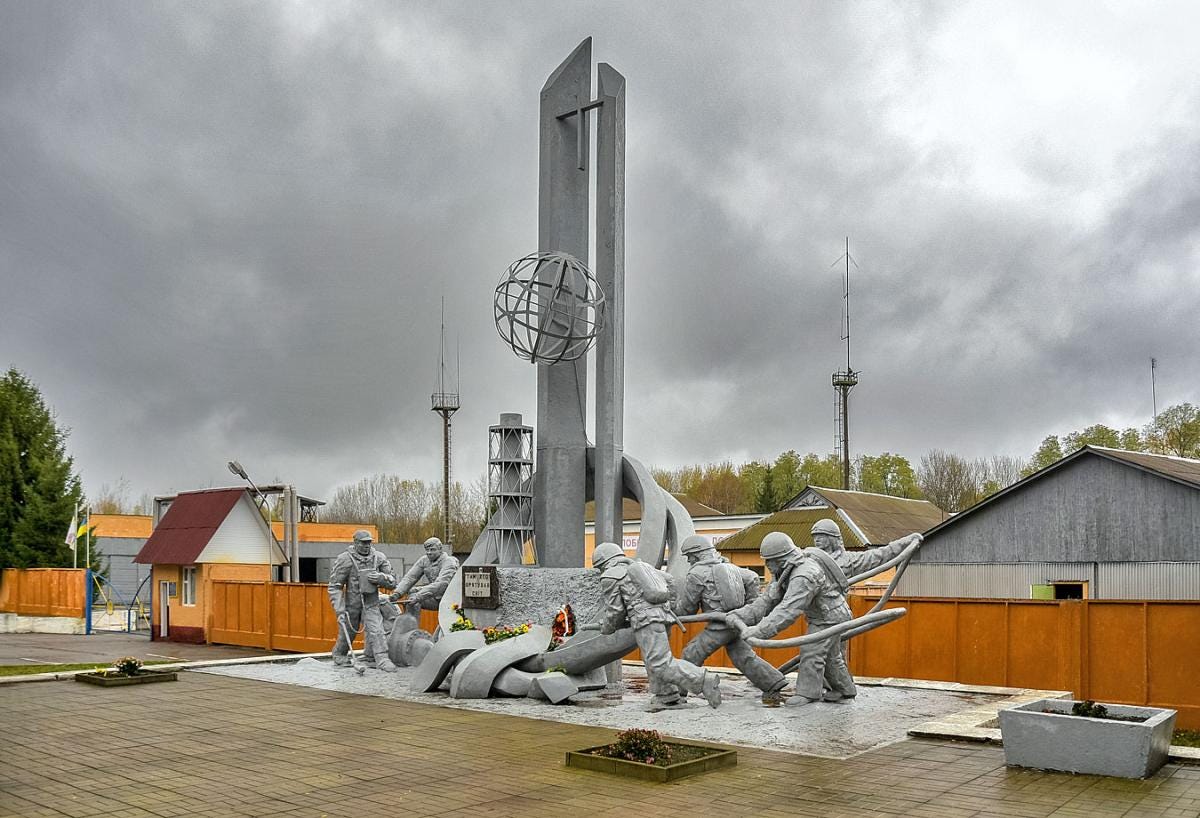
Documents from the highest levels of the Soviet Union, including notes, protocols and diaries of Politburo sessions in the immediate aftermath of the Chernobyl nuclear disaster in 1986, detail a sequence of cover-up, revelation, shock, mobilization, individual bravery, and bureaucratic turf battles in the Soviet reaction, according to the “Top Secret Chernobyl” e-book published today by the National Security Archive.
Key sources include protocols of the Politburo Operational Group on Chernobyl that were published in Russian by the journalist and former Supreme Soviet deputy Alla Yaroshinskaya in 1992. The posting today begins with Yaroshinskaya’s essay (written exclusively for this publication) reviewing the Chernobyl story and her own efforts dating back to 1986 to document and expose the lies and the secrecy that surrounded the disaster.
Also included are excerpts from the diary of Politburo member Vitaly Vorotnikov, notes on Politburo sessions by Anatoly Chernyaev, and excerpts from rare “official working copies” of Politburo sessions that were published in Russian by former Rosarchiv director Rudolf Pikhoia in 2000. Today’s publication also contains declassified reactions from the U.S. State Department’s intelligence bureau, the CIA, and the National Security Council’s Jack Matlock, as well as reporting from the Ukrainian KGB.
“Top Secret Chernobyl” is the first part of a two-volume documentary publication, taking the Chernobyl story through July 1986. The second part will include Soviet military reporting on the radiation contamination, the process of “liquidation” of the consequences, and more foreign reactions to the disaster.
The documents published today complement a number of other important accounts of Chernobyl. The author Adam Higginbotham, whose book Midnight in Chernobyl (2019) illuminates the tragedy with quotations from his hundreds of interviews, also relied on a trove of Soviet-era documents collected by the Ukrainian National Chernobyl Museum in Kiev. In April 2019, Higginbotham published an extremely useful selection of these documents on the “Sources and Methods” blog of the History and Public Policy Program at the Woodrow Wilson International Center for Scholars. The Higginbotham documents particularly detail the reaction of the Kiev authorities, ranging from the Council of Ministers to the Ukrainian Communist Party Central Committee to the Ministry of Health to the Ukrainian Academy of Sciences.
Another richly documented account that begins with the trial of the Chernobyl plant operators in 1987 and analyzes the entire rise of the Soviet nuclear power industry is Sonja D. Schmid’s Producing Power (2015). Schmid dissects the various competing explanations for the Chernobyl disaster, including operator error, reactor design, and deficiencies in the Soviet system overall, and cites to more than 100 pages of notes on sources. A more popularized and novelistic treatment may be found in Serhii Plokhy’s account, Chernobyl: A History of a Nuclear Catastrophe (2018).
Click here for article and declassified documents
Top Secret Chernobyl:
The Nuclear Disaster through the Eyes of the Soviet Politburo, KGB, and U.S. Intelligence
Volume 2
by Svetlana Savranskaya
Washington, D.C., May 15, 2020 – The Soviet Politburo knew as soon as July 1986 that the design of the Chernobyl reactor was at fault in the deadly explosion there the previous April, not just the errors made by reactor staff, according to documents published today for the first time in English by the National Security Archive.
The documents include the extremely important Politburo discussion of Chernobyl on July 3, 1986, when the head of the investigative commission, Boris Shcherbina, clearly stated that it was not just the violations of rules committed by the staff that led to the explosion, but that “RBMK reactors are potentially dangerous” in their very design. Shcherbina called for halting further construction of such reactors (Document 1).
The Shcherbina report gives a deeply critical analysis of the situation throughout the Soviet nuclear power industry and shows that shortcuts had been made that led to serious safety issues and numerous smaller accidents. Although the subsequent Politburo discussion featured attempts to avoid responsibility and to find scapegoats, this document also shows the impact of Mikhail Gorbachev’s policy of glasnost—one hears an unusual amount of disagreements and questioning of the party leadership itself.
Other important documents in today’s posting, which is the second installment in the Archive’s series focusing on Chernobyl evidence (Volume 1), include the initial analysis of radioactive contamination in Sweden, which was the first signal internationally of the Chernobyl accident, Soviet internal discussions of the causes of the accident, and the first signs of domestic opposition in the Soviet Union to the culture of secrecy surrounding all information about the accident.
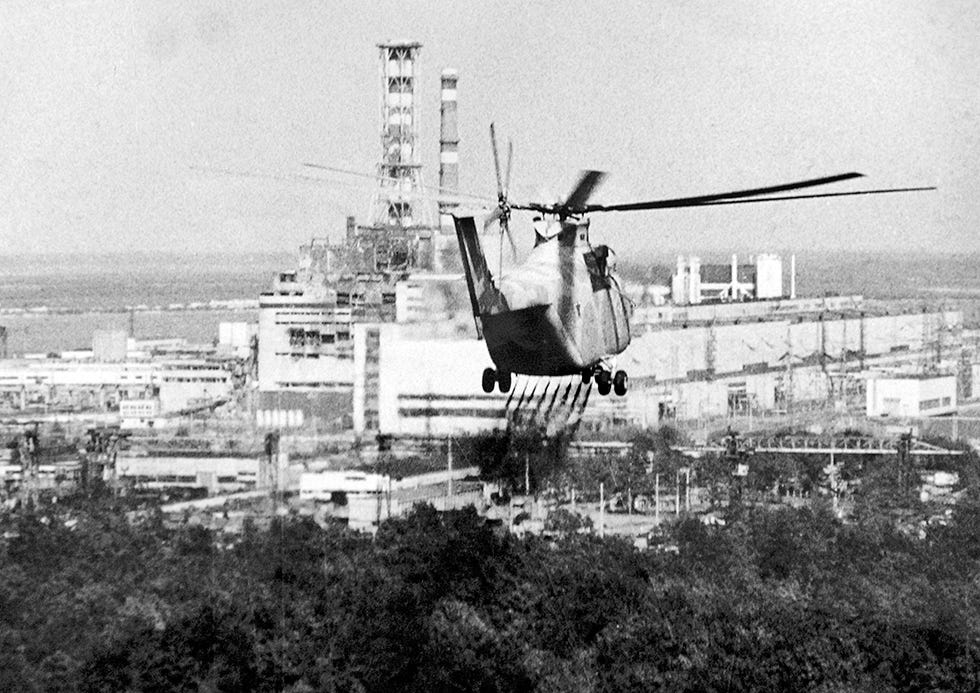
The Soviet documents published here in translation for the first time show the monumental efforts by the military and civilian services to contain the reactor fire, evacuate citizens, and decontaminate the area. This was a public health emergency of a kind the USSR was utterly unprepared for and once its scope was fully appreciated it prompted a huge government effort to come to grips with the consequences.
The State Hydrometeorological Committee and the Ministry of Health produced reports on the effects of radiation on citizens and levels of contamination of water and agricultural resources, closely monitoring the changing situation on the ground. The Ukrainian Ministry of Health reported to the Union Ministry of Health on extensive programs of medical oversight, testing and treatment of evacuees, nutrition programs, and monitoring of children, who absorbed more of the damaging radiation than other groups.
Truly heroic work by the Soviet military—22,500 conscripts by the end of 1986—is presented in the report by Marshal Sergey Akhromeyev, chief of the Soviet General Staff and the person in charge of the military “liquidation” effort (Document 5). According to the continually growing documentary record, the same system that was initially unprepared for a disaster of this scale, was able to respond quickly and to concentrate all its resources on containment and cleanup of the accident.
At the same time, the shock of Chernobyl in the atmosphere of glasnost promoted by Gorbachev led to widespread grass-roots expressions of discontent and criticism of the government response. In a letter to Pravda that was forwarded to the Politburo, a group of “liquidators” describes the lack of medical care and the attitude of neglect from local party and government organs. In November 1988, Academician Andrei Sakharov addressed Gorbachev directly in a letter where he complained about the lack of glasnost and “obstruction” of a publication about Chernobyl by a nuclear engineer who was involved in mitigation of the accident (Document 9). And in 1989, an independent group of “liquidators” in Ukraine attempted to organize a Union-wide organization of “liquidators” that would monitor the cleanup work and even carry out oversight of how the resources disbursed for the Chernobyl mitigation were used by the local administration.
The documents posted here show that notwithstanding an unprecedented effort by Soviet scientists to understand the dangers made stark by the Chernobyl accident, the level of knowledge was still incomplete and often the long-term consequences were underappreciated. For example, in January 1992, a U.S. congressional delegation met with the Vice President of the Russian Academy of Sciences, Academician Evgeny Velikhov, who was one of Gorbachev’s advisers on Chernobyl. According to the cable from U.S. Embassy in Moscow on the meetings of the Codel, when asked about the progress of Chernobyl cleanup,
“Velikhov said that the Chernobyl situation is not as bad as the press says, claiming that low doses of radiation fluctuate more than envisioned and that health dangers are overstated. He cited studies in the Southern Ukraine related to the early warning radar system stating that most illness in this region is due to stress. In Chernobyl, he said, children suffered thyroid problems and other non-cancerous illnesses due to quick iodine emission, but the Soviet record shows there is no record of increased cancer cases. When asked if Chernobyl has been cleaned up, Velikhov responded negatively, saying there is still a thirty-kilometer non-populated zone, which is contaminated by cesium and strontium and which will take a long time to decontaminate. Otherwise, there are local spot concentrations outside the zone. Based on experience from the Urals (Kyshtym), the area will be more or less safe after thirty years, he said.”[1]
The following essays were contributed by two members of the Russia Program staff based on research in the documents in today’s posting.
Click here for declassified docs and more!
I go back to original documents and declassified files. I believe we should not be teaching history by rote memorization. We should treat history as a science that we constantly go back to and test. Not just repeat what we memorized as kids. The danger is our politicians know “what everyone knows” and not what actually happened.
We are the first society to keep a record of our negotiations, our meetings, our Intelligence work, good and bad. I do not know how long this will last but while we have access to it let’s use it. become a paid subscriber and I will keep digging. Our “reality”, our “news” are often colored by the times, prejudices and false stories. Only by going back and looking at the past documents and declassified files can we make sure the story isn’t tainted.
Behind the paywall: What Happened at Chernobyl: 40 years on
